Centre des monuments nationaux

Main menu

Monuments placed under the responsibility of the Centre des Monuments Nationaux for opening to the public

  • A
  • B
  • C
  • D
  • E
  • F
  • G
  • H
  • I
  • J
  • K
  • L
  • M
  • N
  • O
  • P
  • Q
  • R
  • S
  • T
  • U
  • V
  • W
  • X
  • Y
  • Z
 
accessi_vous_etes_ici Home  >  Monuments  >  Cairn de Barnenez
Cairn de BarnenezCairn de Barnenez

print_this_page

Explore the Barnanez cairn, the largest Megalithic mausoleum in Europe, lying at the top of a steeply sloping peninsula in the bay of Morlaix in the Finistère. 

Visiting the Barnenez cairn 

• The ‘Megalithic Parthenon’.
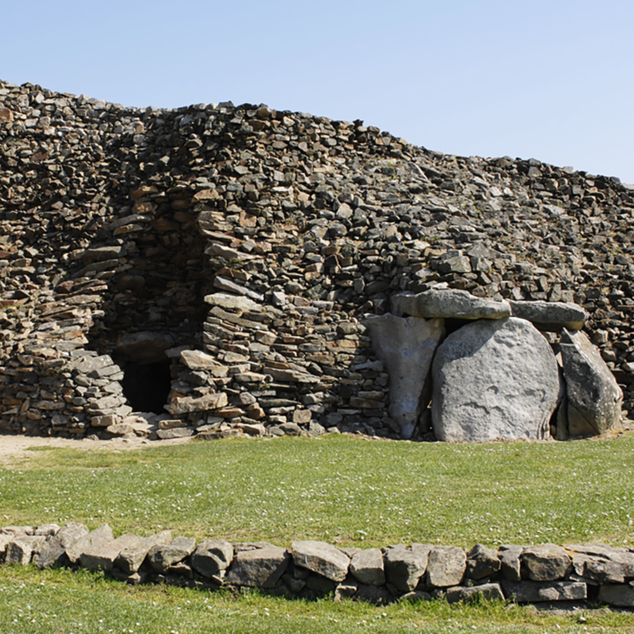
This monument is 75 metres long and 5 metres high, and is made up of two juxtaposed cairns housing 11 passage tombs. A large-scale model in the reception centre provides a better understanding of how the monument is laid out, and reproductions of decorated floor stones are on show. The north facade was used as a quarry, and certain chambers of the dolmens have been exposed showing how they fitted into this monumental architecture. 

Understanding the Barnenez cairn 

• Virtuoso builders.
Two sorts of vaulting are used in these tombs, either a flat stone as is used in normal dolmens or a ‘false’ rounded dome made out of a clever structure of little flat stones. It was built in Neolithic times (4 00 to 3500 BC), during which period man became sedentary and started farming. 

• A ‘rediscovered’ site.
It was identified as a "tumulus" (man-made earth mound) in 1850, but rediscovered in 1955 when it was being used as a quarry. From 1955 to 1968 excavation and consolidation work was carried out, and this enormous mound of stones regained its original appearance.


Bottom menu